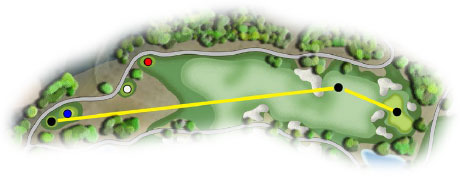
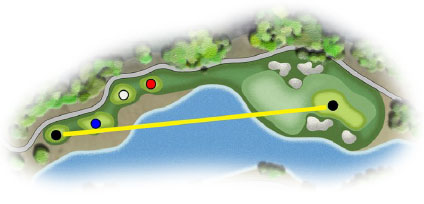
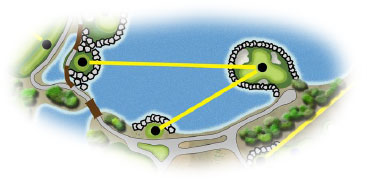
Kings Course, the third golfing masterpiece at Kings Island Golf Resort, officially opened in 2018 and showcases the distinctive design style of Jack Nicklaus II. Its most striking feature is the iconic 55th hole, where players tee off from a high waterfall, creating a truly breathtaking and rare experience.
According to Jack Nicklaus II, Kings Course was built in a modern, world-class style, balancing strategic challenges with natural beauty, offering golfers “a very special gift uniquely for Vietnam.” Previously, his work was recognized as the “Top Public Access Course in Massachusetts” - a testament to the enduring quality and timeless value of the Nicklaus Design brand.
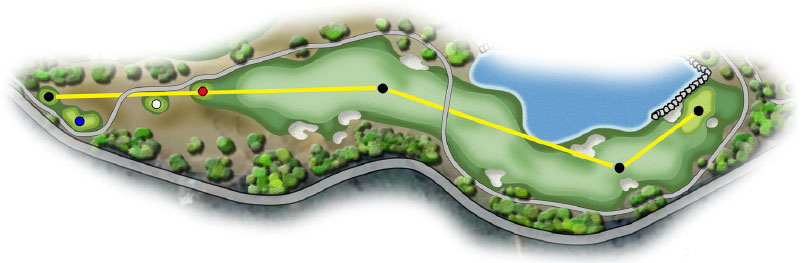
This relatively straight forward opening par 4 plays from elevated tees to a wide receptive landing area. A tee shot to the left side of the fairway close to the three fairway bunkers will be rewarded by an easier approach angle to the green. Long tee shots may reach a “speed slot” that kicks the ball forward even further.
The left side of the green is elevated and receptive; the lower right side of the green is protected by strong bunkering and the more difficult portion to attack. A miss right will roll off into a grass low, providing a testing chip.
This medium length par 5 plays though a forest of tall trees. The dogleg right tee shot plays through a slot at 100m from the pro tee. Accuracy will be paramount off the tee. The 2nd landing area is a double high/low fairway split by a large diagonal bunker.
The low fairway left, is open and inviting, but will provide the more difficult approach shot. The high narrow fairway on the right will offer the easier approach angle to a large diagonal green.
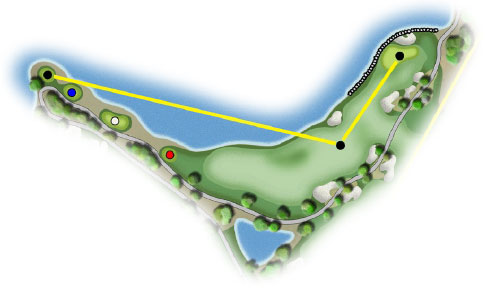
This long par 4 dogleg left is best played down the left side. The fairway bunker on the left is relatively short, good players will want to carry this bunker for the best 2nd shot angle. The fairway to the right is wide and inviting but offers a more difficult and longer 2nd shot.
The green will accept a left to right shot shape, but an approach from the right side of the fairway will play to a side-angle green protected by strong bunkering and mounding on the right side. The green and pot bunker are a modified reversed version of the “17th road hole” at St Andrews in Scotland.
This relatively short par 3 has a very long green, players will need to select their club carefully. The premium will be on placing the tee shot on the correct section of the green. The mid-section of the green is a high central plateau that creates separation between back and front. The base of the pin will not be visible when the cup is located on the back left section creating a sense of mystery.
Prominent roll-offs flank either side of the green. A stand of high trees creates a natural backdrop to the complex.
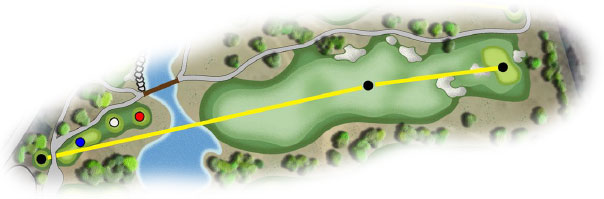
An exciting par 4 dominated by a meandering creek that bisects the fairway past the landing area. Water will come into play on the 2nd shot with the creek adjacent the right side of the green. A forest left of the green, and a waterfall right compliment the picture.
A picturesque par 3 over a lake to a large green; bail out is offered on the right side but complicated with bunkering. The back section of the green although away from the water is flanked on either side by bunkers. The safe option will be to play for the middle of the green.
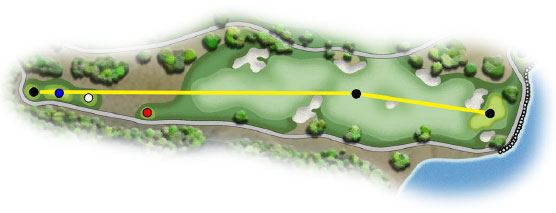
This short uphill par 4 has a wide landing area that offers the player various options off the tee. The central fairway bunker and tree will not affect stronger players, however the fairway narrows dramatically for longer hitters around the 270 to 290 yard zone. Out of bounds on the right should not be a factor. The front of the green is better approached from the right side of the fairway. The back section is better approached from the left side. The long green places a premium on correct 2nd shot club selection.
The left side of the green is dominated by 2 bunkers, with one on the right that protects the back right pin. The fairway wraps around the right side, offering a narrow low bail out area.
The downhill tee shot on this par 5 plays to a wide landing area. A “left to right” tee shot shape aimed at the left side fairway bunker is ideal. The lake is not reachable from the tee, but very much in play for the 2nd and 3rd shots. Longer tee shots will be rewarded with an opportunity to get home in two. Players will be able to utilize the feeder slope short right of the green to bounce an approach shot onto the front section of the green. The green is well protected with water and bunkering.
This strong finishing par 4 plays over a meandering creek twice. The downhill tee shot plays over the creek to a receptive cambering fairway. The closer one lands to the creek, the better the approach angle to the green. The green is protected by a pond on the left but more easily approached via the lay-up fairway on the right.
The right side of the green is easier to approach with a forgiving bail out fairway to the right; the back left side of the green is close to the water and offers a more challenging pin location.
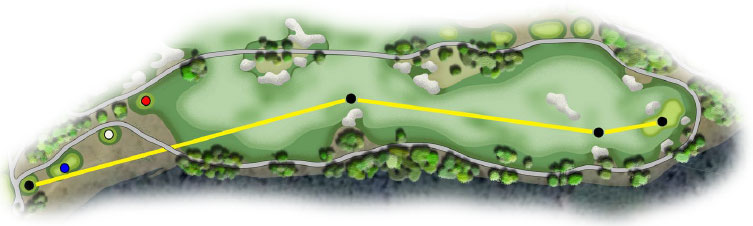
This par 4 has an uphill tee shot to a right-to-left sloping fairway; a well-placed drive over the carry fairway bunker on the left will be rewarded with a shorter approach to the green with the hill behind. The higher right side of the fairway will provide players with spectacular vistas of the green and large lake in the background, but a testing 2nd shot over a small bunker short right of the green. A deceptive valley behind the green will collect over enthusiastic or pushed approach shots.
This is the longest par 5 on the King’s Course and is a player’s first exposure to the King’s Island Lake! Water is in play tee to green all the way down the left side. The 1st landing area is wide with 3 cross bunkers that may block the 2nd shot visually. The closer one plays to the water the better the apparent strategy will be. The large green is a perceived island surrounded by bunkering and water left. Players will need to pick their way carefully through the bunkers.
This relatively short but challenging par 4 will be a stern test! The more water carry a player can “bite” off from the tee the easier the 2nd shot will be. Players opting to play safely to the short, right fairway off the tee will have a testing 2nd shot over bunkers and a valley to a narrow green with water behind.
This hole is intended to be a drivable par four for longer players, so from time to time the tees should be moved forward to entice the good player.
This is a medium length downhill par 4 with 12 metres of elevation between tee and green. The fairway is well bunkered; strong players may opt to try to carry the right side fairway bunker so as to provide an easier approach angle to the elevated green. The right side of the green will be easier to approach, the left being more protected with a deep front bunker.
The shorter par 3 on the back nine plays out onto a peninsula in the lake. The green is elevated and well protected with bunkers and water on either side of the hole. This is likely to be one of the more memorable holes on the course.
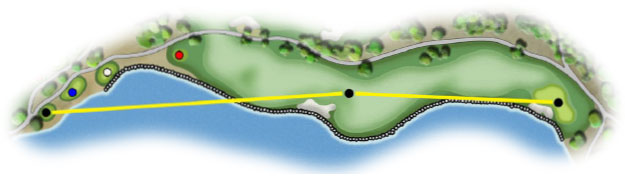
This long and difficult par 4 has water in play on the right from tee to green. The large green will be receptive to low running approach shots that may bounce in off the mounding on the front left. The front right is guarded by a collection bunker; the back right section of the green is closer to the water.
Another deceptive short downhill par 4, from the blue tee, it may be reachable with a well hit tee shot that carries the left side fairway bunker. Long tee shots to the right will feed into a low providing a “blind” 2nd shot to a “punchbowl” green guarded by deep bunkers on the right side.
This is the longest par 3 on the course! The green is styled on the famous “Redan” of North Berwick in Scotland with a high front left section and low back right section. The short left bunkers provide a form of deception and are best carried off the tee. A well hit tee shot over the bunkers with a “left to right” ball flight may feed the ball to the back right section of the green.
The bunkers to the right further protect the back right pin location. The water is not intended to be in play strategically, but will no doubt catch the “miss” hit to the right. A miss to the left will either be caught by the left side high bunkers or collect in the valley separating the green from the hill. Shots landing in the valley left will provide a tricky test to a narrow green sloping away with bunker and water on the other side.
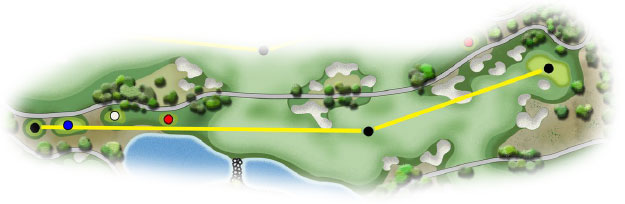
This is a strong “risk/reward” par 5 finish! The large lake on the right should not worry the good player, and a well hit long tee shot will offer the opportunity to reach the green in two over the internal lake; this lake should not be reachable with the tee shot. Players opting to take the safer three shot route may negotiate the fairway wrapping around the right side of the lake. A waterfall behind the green will make for a memorable finish.
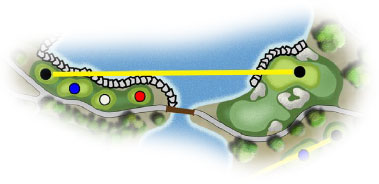
As an exciting and unique feature, we have provided one more testing par 3 that players may use to settle any contests, or just play for fun. This par 3 is a “do or die” carry to a peninsula green. The green is deceptively forgiving in terms of size, but fully surrounded by water and three bunkers. Not only does the hole require 100% carry over water, but the 3 tiers in the putting surface will demand accuracy.